Our Process
Working with the client every step of the process, we start by creating thumbnail sketches combining our collective ideas and inspirations.
Once the design is approved, we render a full size drawing.
The design goes through many small changes before being the final version.
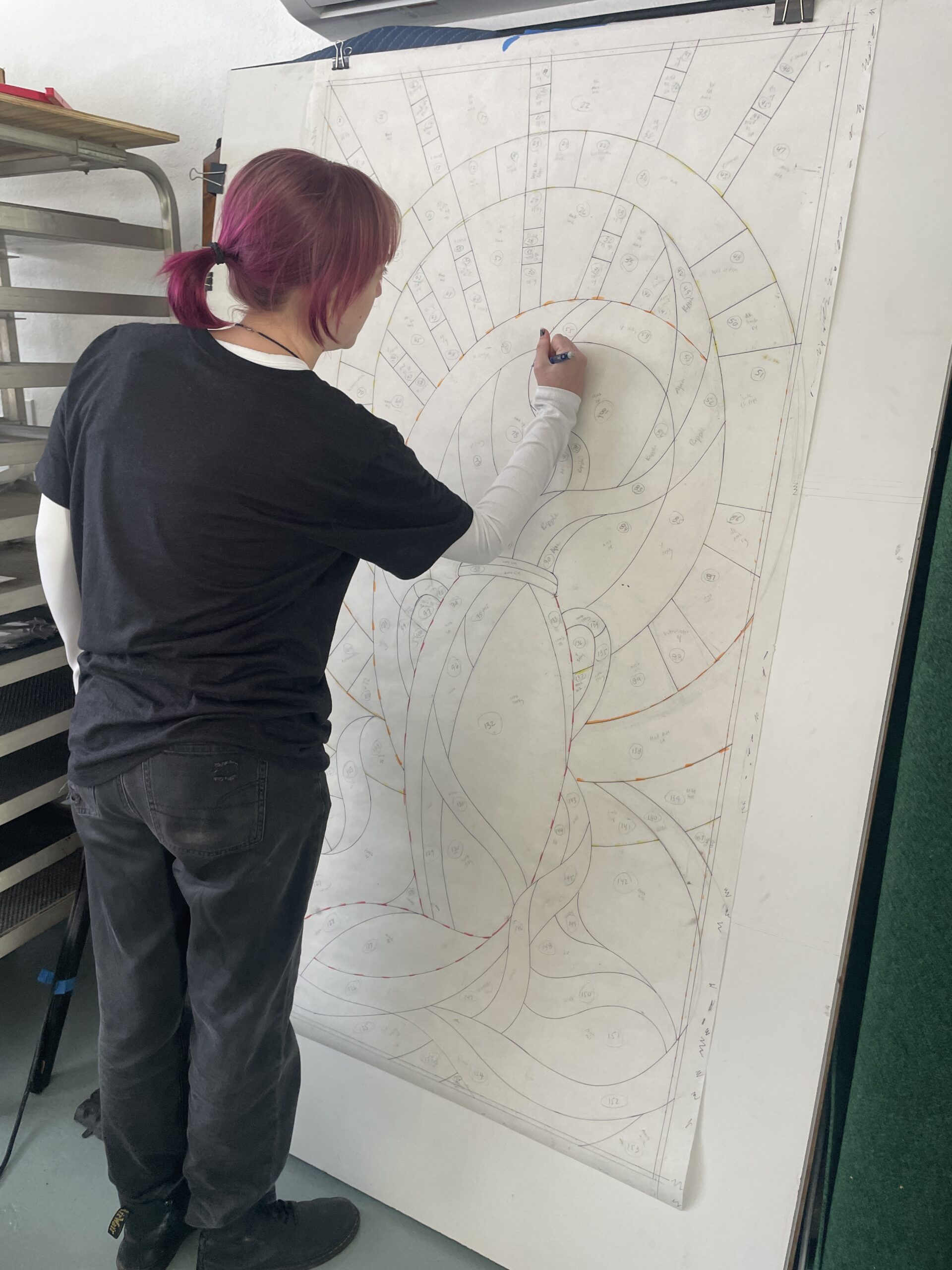
Here you can see Abby is working on the full size sketch for “The Wedding at Cana” window for Our Lady of Grace Church.
After the sketch is finalized, we ink the lines in, number the pieces, and decide the lead thickness, indicated by different colored highlighters. This window had 156 pieces in it!
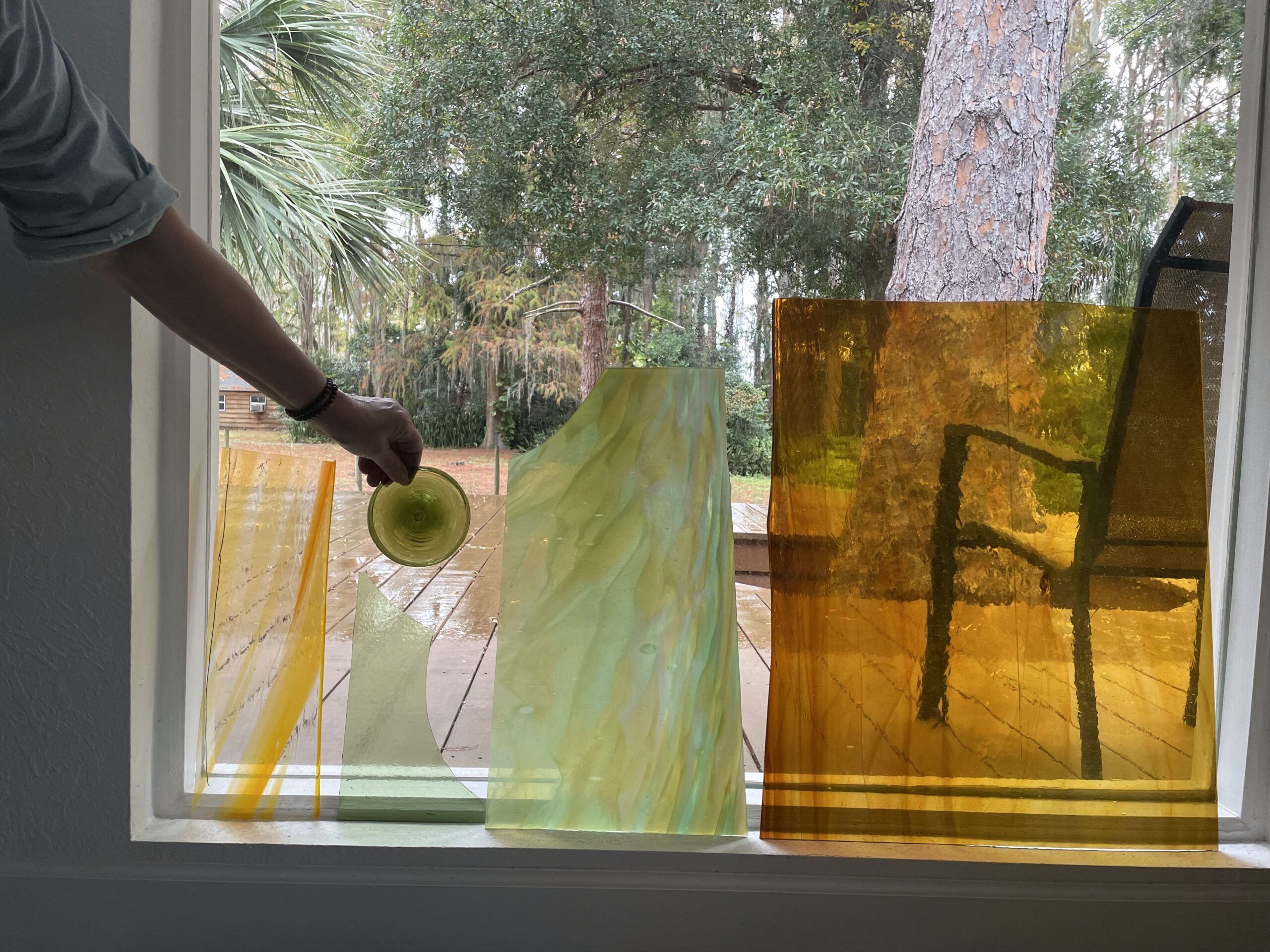
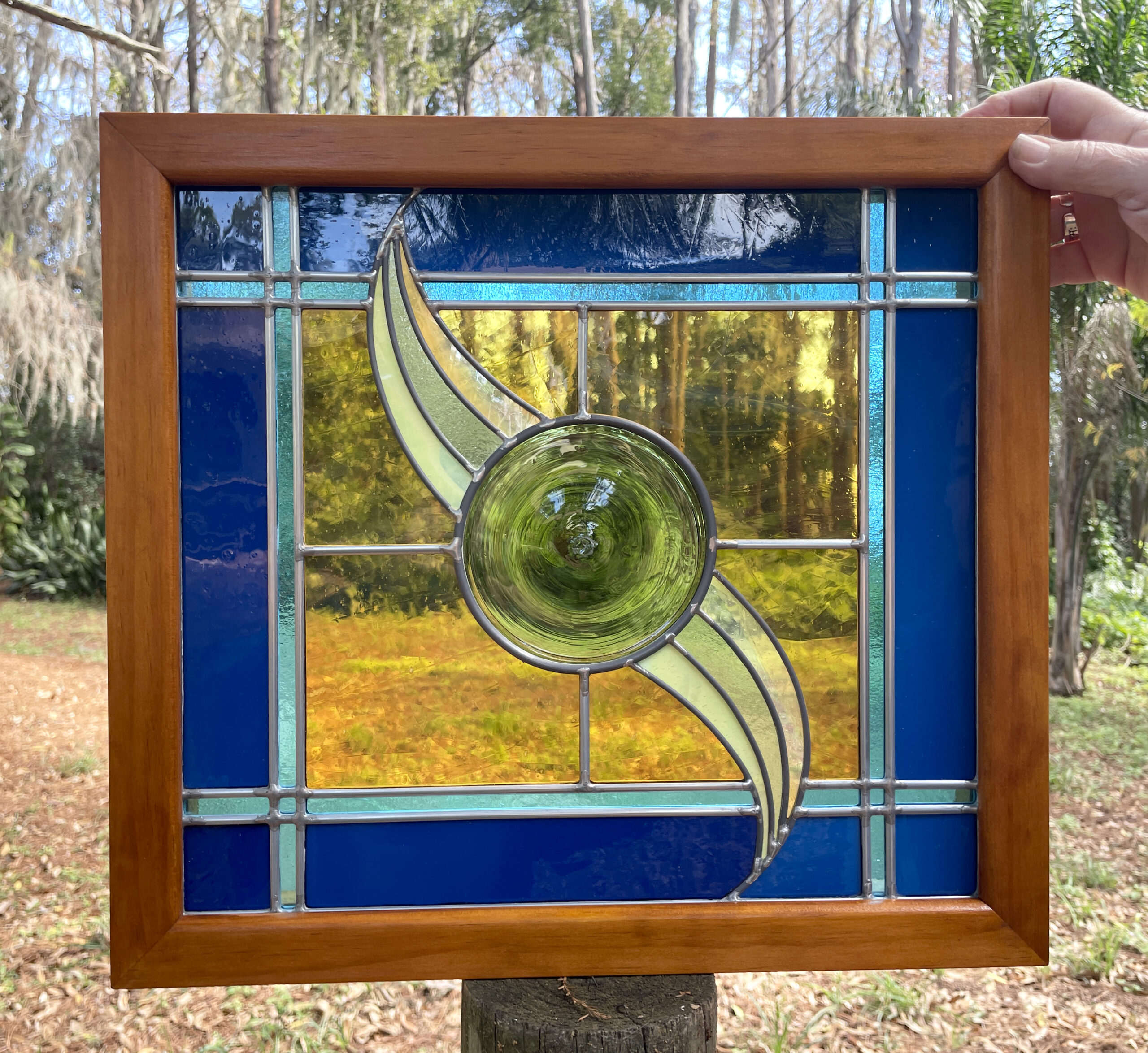
After we have the piece fully drawn up and inked in, we begin choosing the colors. As we decide the colors we assign a name to them and write it down on the pattern. This is one of the most important parts of the process, and there are several factors that come into play here as we think about not just color, but also saturation, opacity, and texture of the glass. We also consider the location and function of the window, considering things like the direction its facing, the room it will be in, and the privacy wanted. We lay the glass out in the windows and on the table, making this a full day or multiple day process depending on the size of the panel. Here you can see some glass we chose for this entryway panel, and the finished piece beside it using the same colors.
After we finish choosing the colors, we begin cutting the glass. We use a glass cutter that has a tungsten carbine wheel that is used to score the glass. We then tap it to break it along the score line.
If the cuts are precise, it will make the future steps a lot easier. Deep inside curves and thin pieces are the trickiest pieces to cut and require a lot of patience.
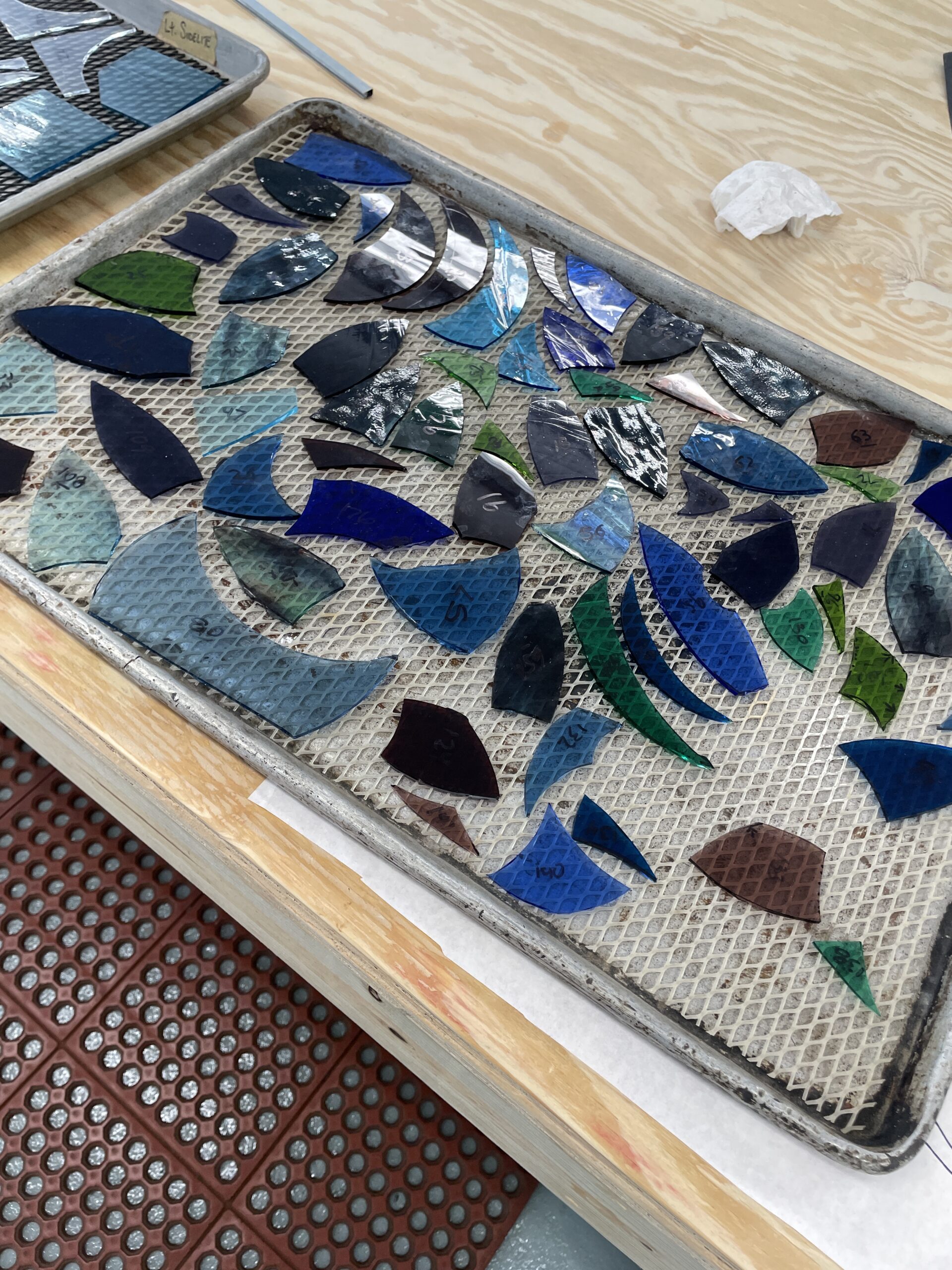
As we cut the pieces we number them and put them on a tray like the picture to the right. These are the pieces for the “Three Little Birds” panel.
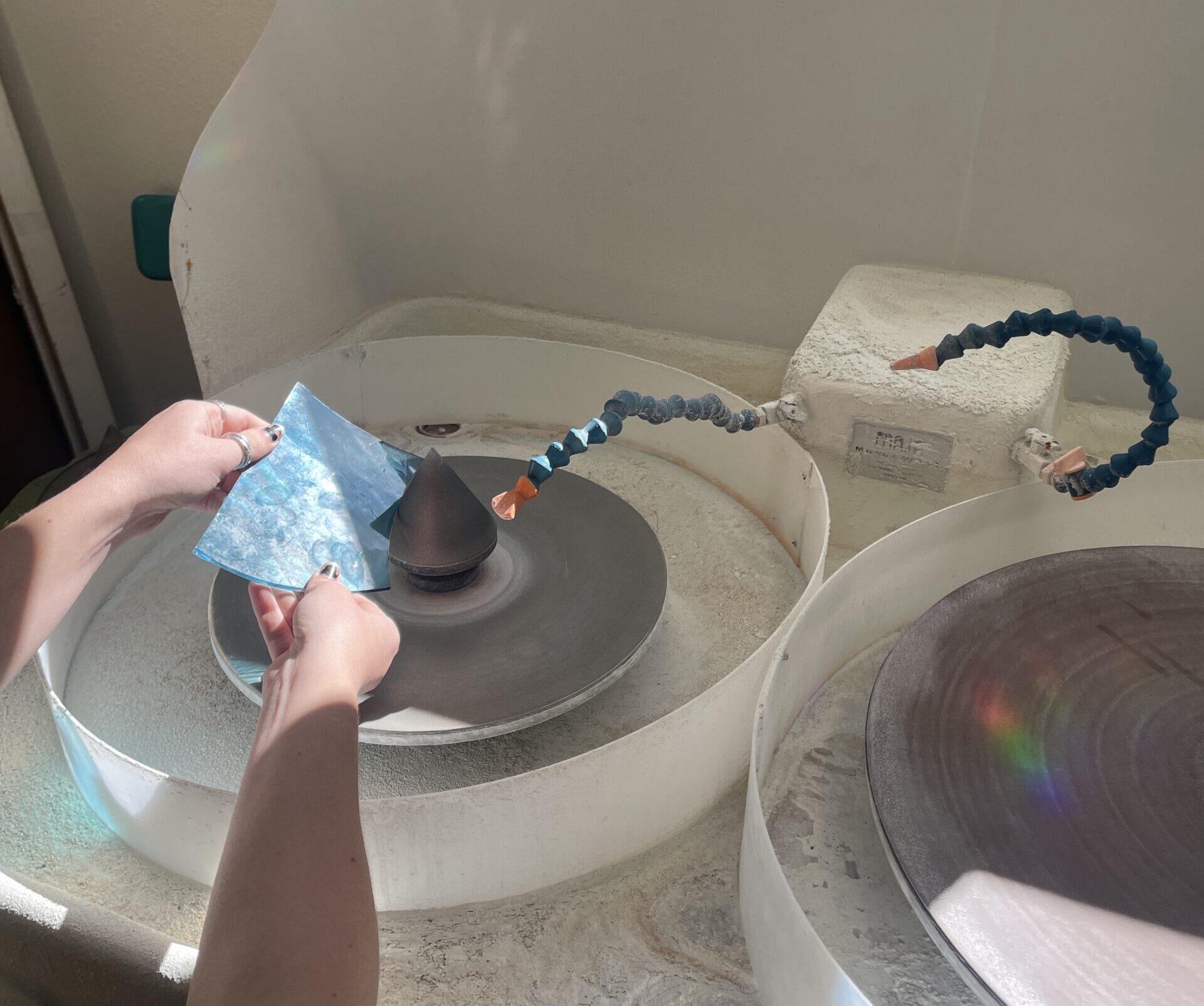
After cutting all the pieces, we begin grinding the glass. Since its impossible to perfectly cut glass, grinding helps make the glass fit perfectly on our pattern.
This glass grinder uses a diamond bit to shape the glass. There is a cone in the center for grinding curves and a wheel for doing straight lines.
The grinder uses water to keep the glass wet while grinding, otherwise we would be breathing in hazardous glass dust.
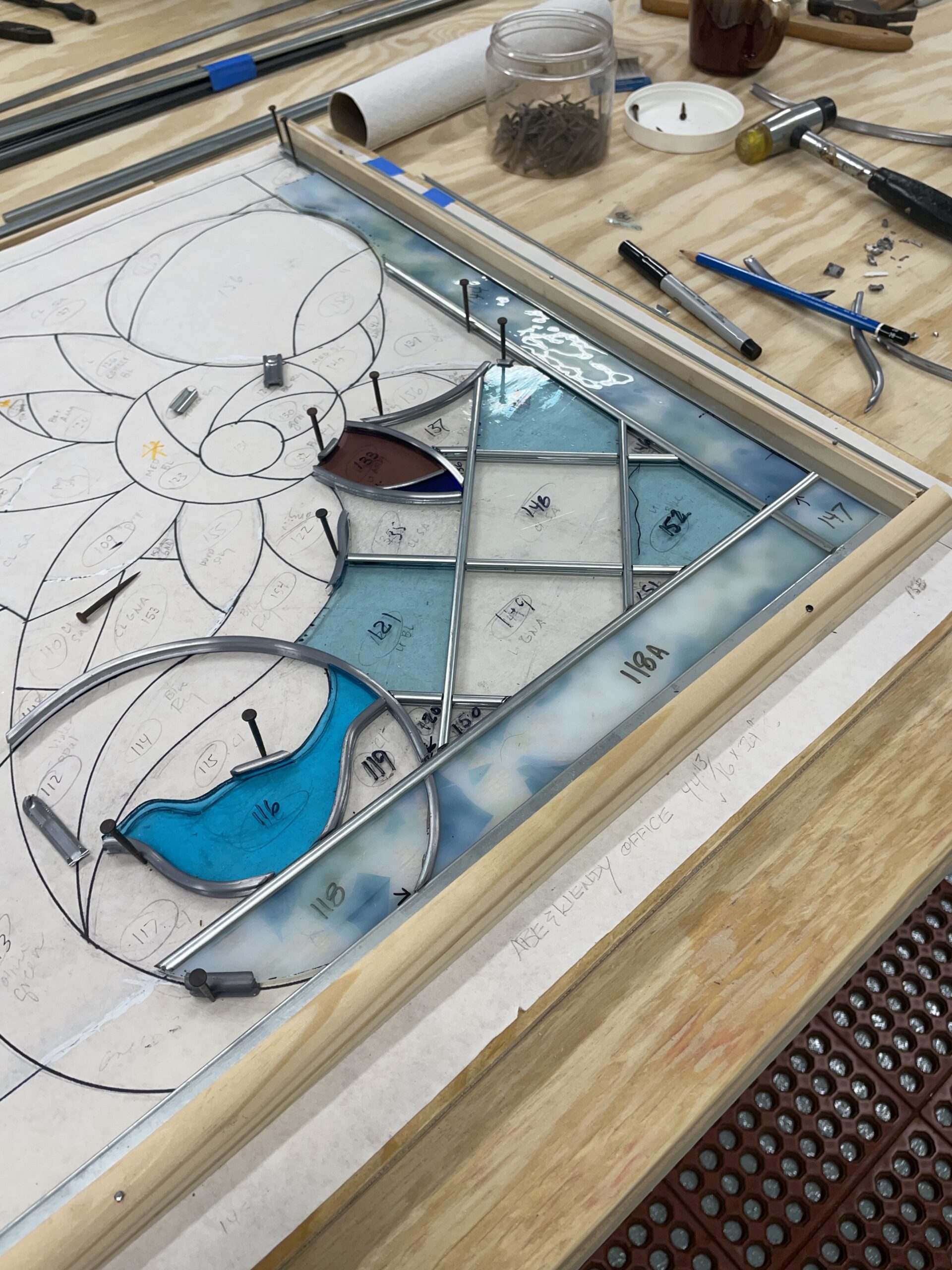
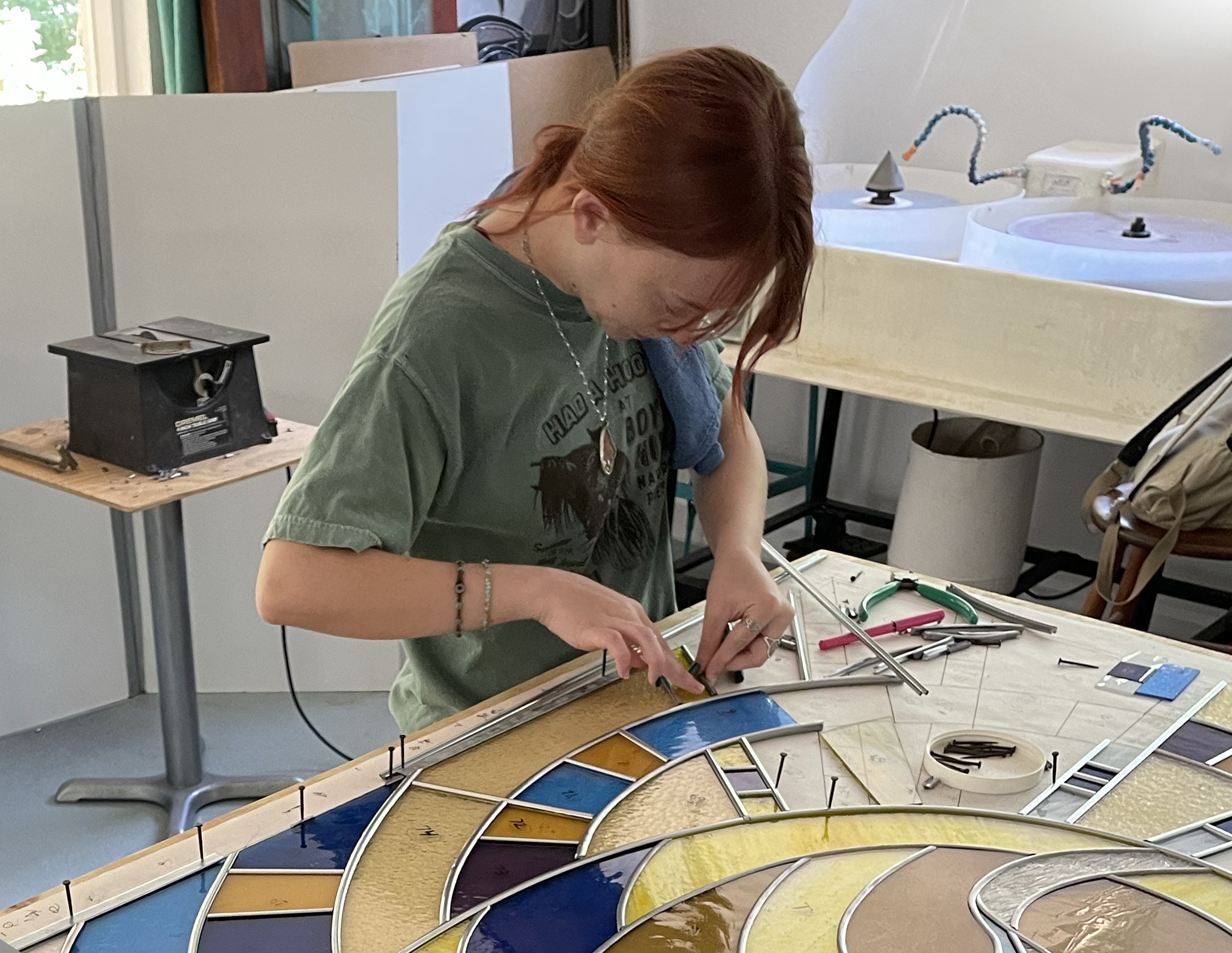
After grinding the glass, we begin assembling the panel! This part is called leading because we fit the glass inside in the lead channels. We also use zinc, which is stronger and lighter but harder to bend. We hold the glass in place while we work with special nails. It is important to make sure the pieces stay aligned and that nothing shifts while leading.
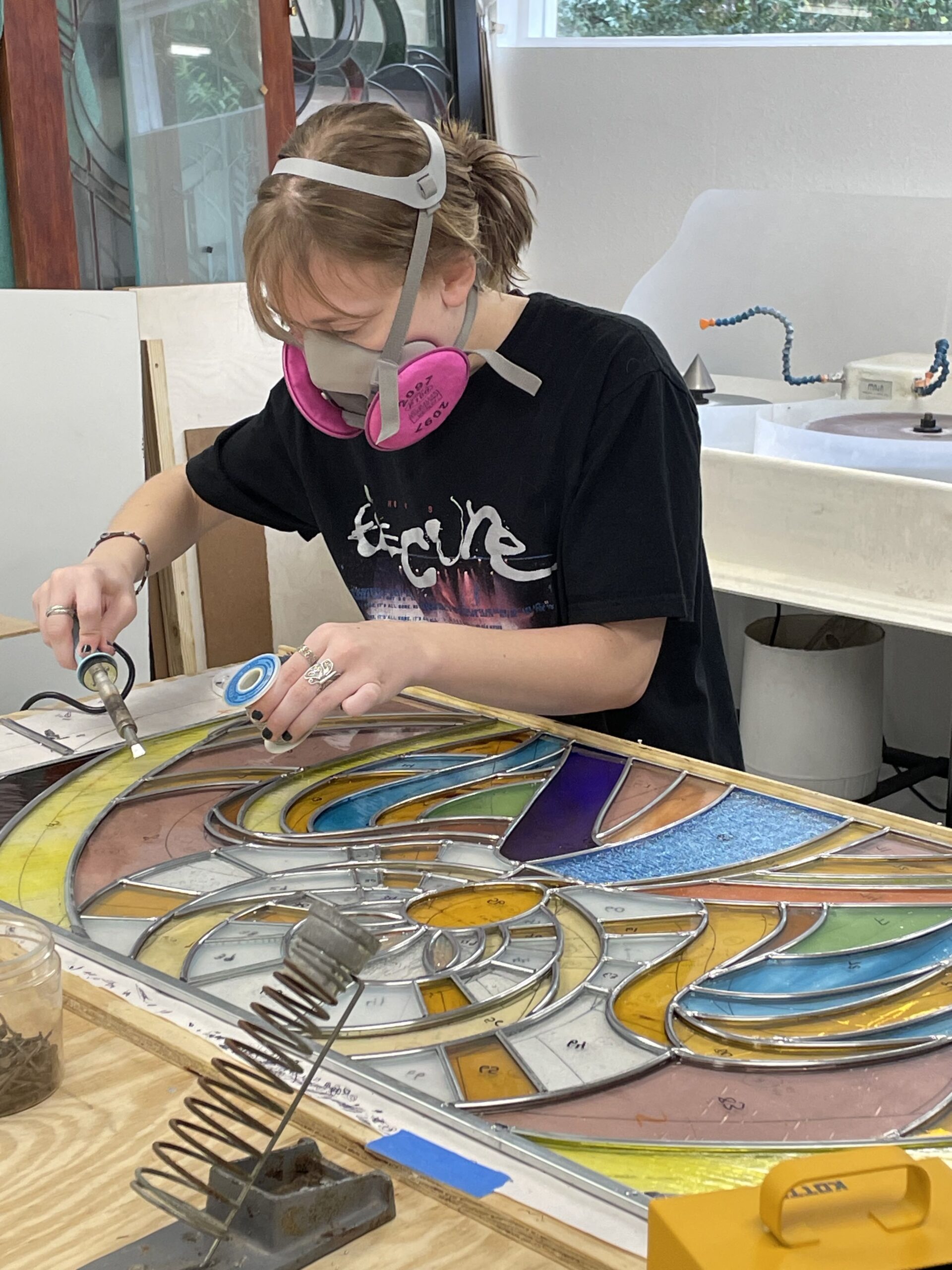
After the panel is leaded we solder the joints together to ensure it is structurally sound and stable. We melt the solder with a soldering iron to create a strong bond at each joint. This locks the lead came in place and keeps the panel from shifting or sagging.
Here you can see Abby soldering the top panel of “Joseph visited by Angel Gabriel in a dream”
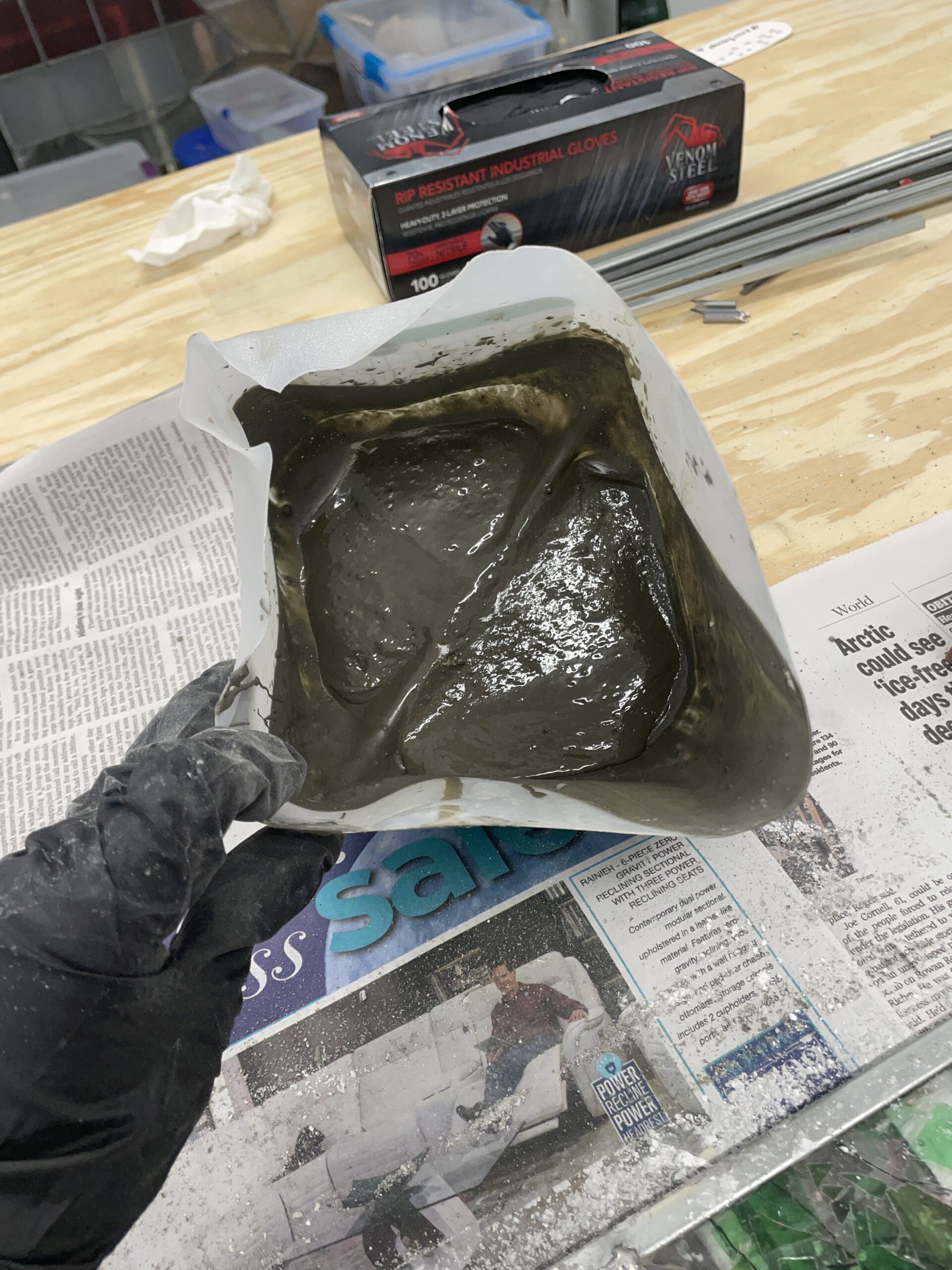
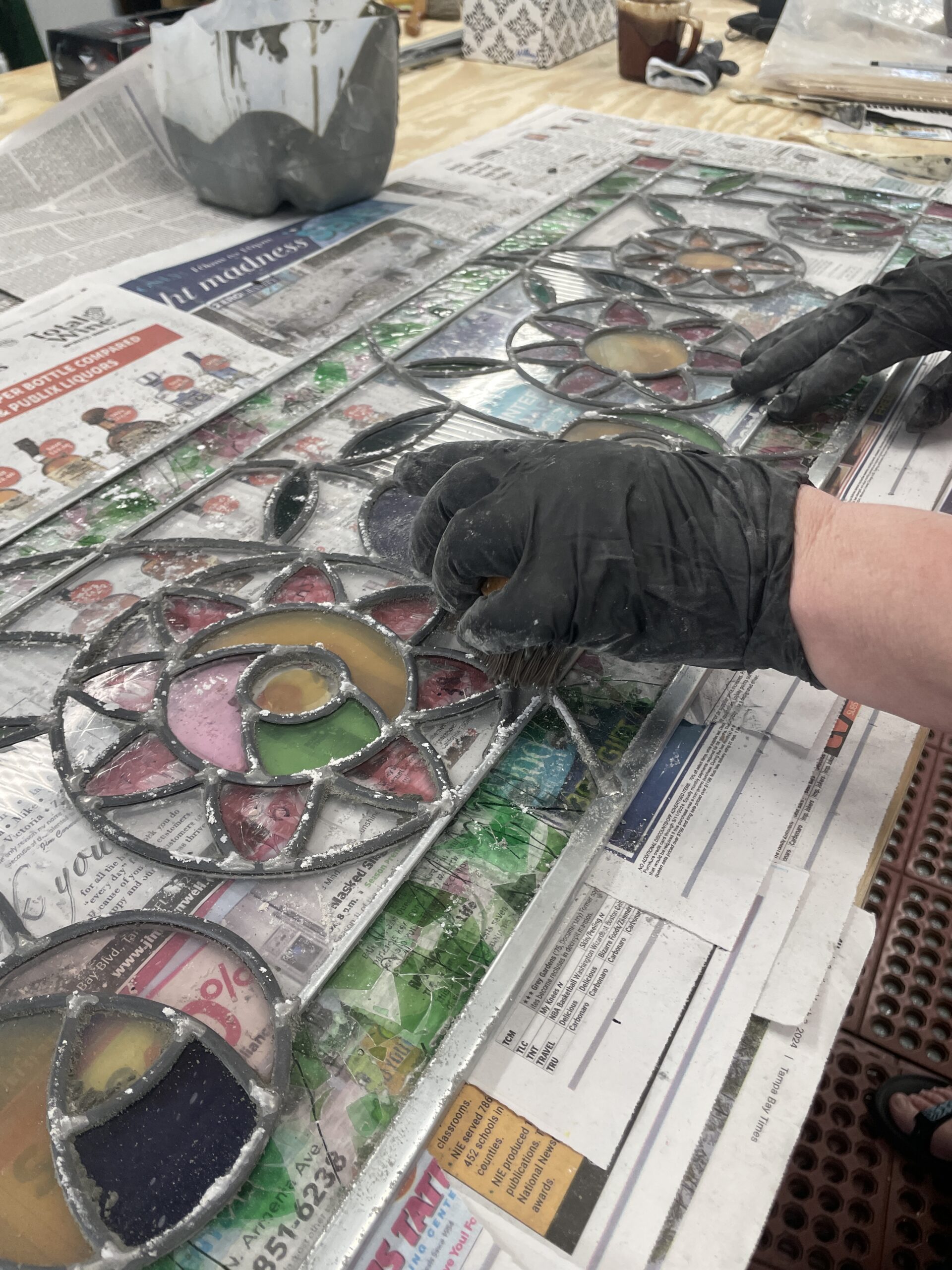
After soldering we putty the panel to ensure it is rigid and durable. The putty fills the gaps between the lead came and the glass and strengthens the overall structure, extending the life of the panel. Below you can see the putty mixture and the panel in process of being puttied. We brush the putty into the channels with a brush and it goes through multiple stages of cleaning after to remove the excess putty.